
![]() Persönliche Betreuung
Persönliche Betreuung
![]() What Is Personal Care
What Is Personal Care
And Why It Makes All the Difference
Table of Contents
What Is Personal Care ?
And Why It Makes All the Difference ?
Personal care refers to hands-on, one-to-one support with the intimate daily tasks that keep a person clean, comfortable, healthy, and feeling their best.
For many elderly individuals, these tasks — bathing, dressing, grooming, toileting — become increasingly difficult to manage independently due to reduced mobility, chronic illness, pain, or cognitive decline. Personal care ensures these needs are met every single day, with professionalism and deep respect for the individual’s dignity.
It is one of the most meaningful services in home care. And when done well, it is also one of the most impactful.
What Does Personal Care Include?
Bathing & Showering
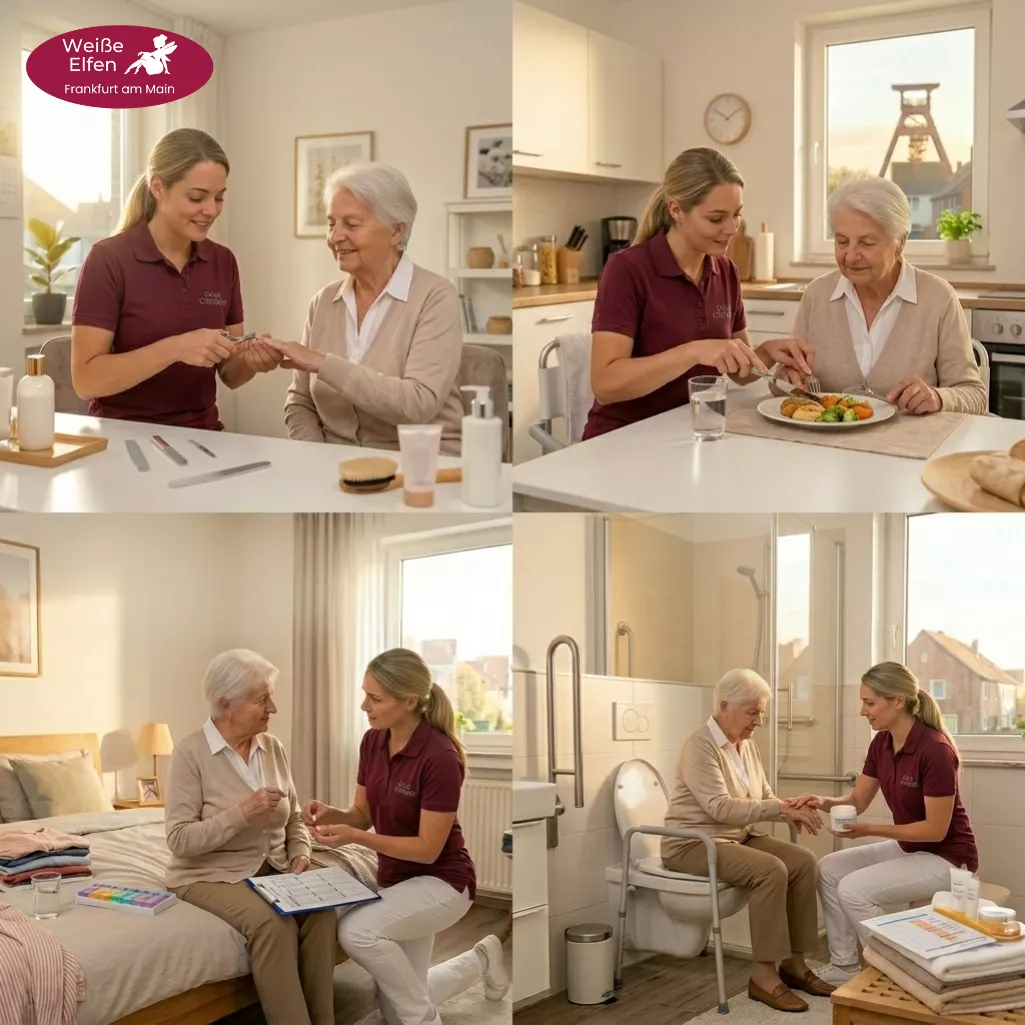
Safe, comfortable assistance with bathing or showering – including washing hair, rinsing, and drying. Every step is carried out at the individual’s own pace, with full attention to comfort and privacy.
Dressing & Undressing
Help selecting and putting on appropriate clothing – including managing buttons, zips, and footwear. Caregivers encourage as much independence as the individual can manage, assisting only where needed.
Grooming & Appearance
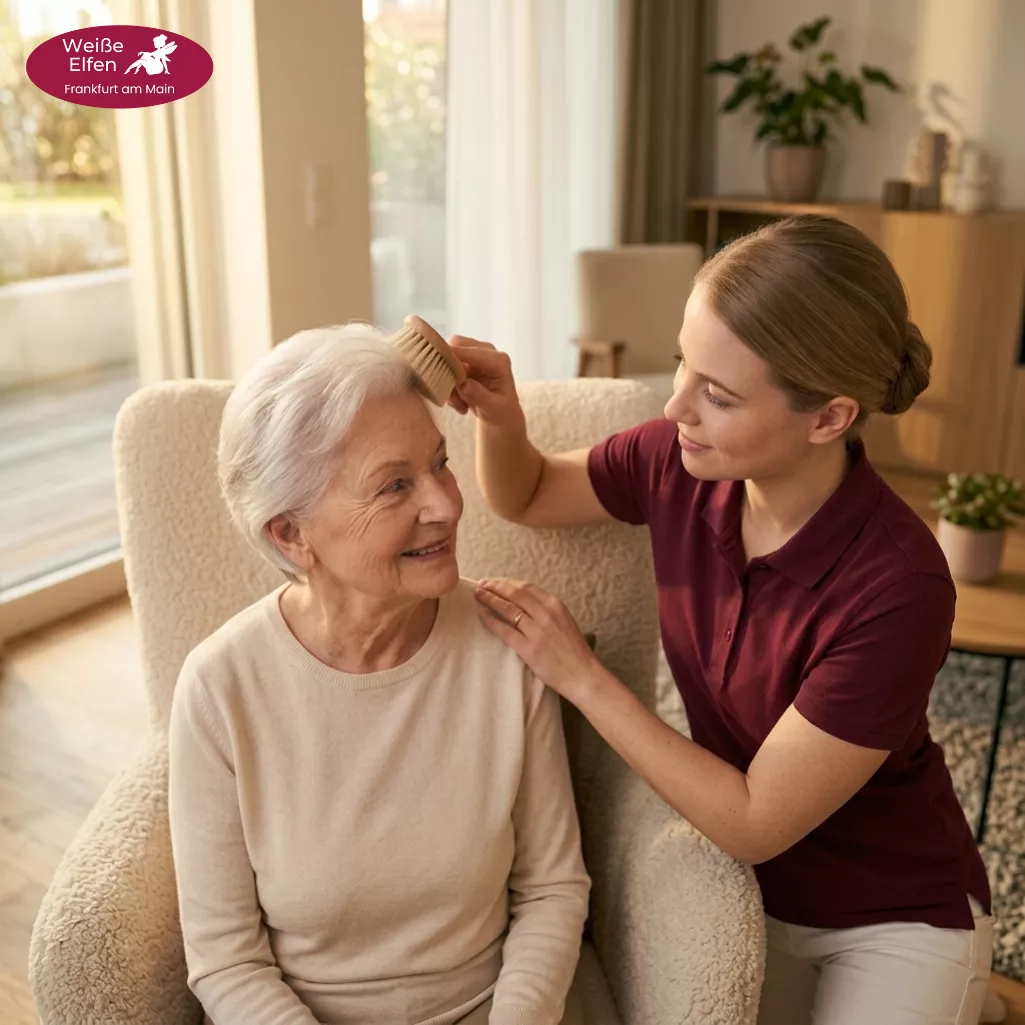
Hair brushing and styling, shaving, nail care, skincare, and oral hygiene. Looking well-groomed has a direct and proven impact on self-esteem and emotional wellbeing – especially for elderly individuals.
Toileting & Continence Support
Sensitive, dignified assistance with toileting needs and continence management. This is carried out with complete discretion, respect, and zero judgment – always.
Morning & Bedtime Routines
Support getting up, washed, and ready to start the day – and winding down, changing into nightwear, and settling comfortably at night. Consistent routines are particularly beneficial for individuals with dementia.
Medication Reminders
Ensuring medications are taken correctly, at the right time, and in the right dosage – reducing one of the most common causes of health deterioration in elderly individuals living at home.
Assistance at Mealtimes
Help with eating and drinking where needed – including setting up meals, cutting food, and ensuring the person is comfortable and nourished throughout the day.
Skin & Pressure Care
Regular moisturizing, repositioning for bed-bound individuals, and monitoring for early signs of skin breakdown or pressure sores – essential preventative care that protects long-term health.
Who Is Personal Care For?
Personal care is for any elderly individual or senior who needs support with daily self-care tasks – regardless of the reason.
This includes people who are:
- Living with reduced mobility or chronic pain
- Managing a condition such as arthritis, Parkinson’s, stroke, or dementia
- Recovering from surgery or a hospital stay
- Living with a disability that affects daily functioning
- Simply finding that certain tasks have become harder to manage safely alone
Why Personal Care Matters - Beyond the Practical
Personal care is about far more than hygiene. It is about how a person feels about themselves every single day.
It preserves dignity. Being clean, well-groomed, and comfortably dressed gives a person confidence and self-respect — regardless of age or ability. This is not a luxury. It is a fundamental human need.
It protects health. Poor hygiene, skin breakdown, missed medications, and inadequate nutrition all lead to serious health complications. Consistent personal care prevents many of the most common causes of hospital admission among elderly individuals.
It provides human connection. A personal caregiver is not just someone who helps with washing and dressing — they are a trusted, familiar presence. That relationship provides companionship, emotional warmth, and the reassurance of knowing someone genuinely cares.
It gives families peace of mind. Knowing that a loved one is clean, comfortable, safe, and well cared for every day — by a professional they trust — is an enormous relief for family members who cannot always be there themselves.
What Makes a Good Personal Caregiver?
Not everyone is suited to personal care work — and the best personal caregivers share certain qualities that cannot be trained into a person:
- Genuine warmth and empathy — they care, and it shows
- Patience — they never rush, never make the individual feel like a burden
- Discretion — they handle intimate tasks with complete respect and sensitivity
- Reliability — they show up, every day, exactly when needed
- Attentiveness — they notice changes in the person’s condition or mood and communicate them to the family
Gut informiert, gut betreut
What if my loved one feels embarrassed about receiving personal care?
This is very common — and completely understandable. Our caregivers are trained to introduce personal care gradually and sensitively, always working at the individual’s own pace and building trust before taking on more intimate tasks.
How often does a personal caregiver visit?
As often as needed. Some individuals require one visit per day — typically in the morning to help with washing and dressing. Others need support morning and evening. Full-day or live-in personal care is also available for those with higher needs.
Will we always have the same caregiver?
We aim to provide the same caregiver for every visit. Consistency is especially important in personal care — familiarity builds trust, and trust makes everything easier.
Is personal care covered by insurance?
Depending on the recognized care level, personal care services may be partially or fully covered by care insurance contributions. We help families navigate this during a free consultation.
Can personal care be combined with other services?
Absolutely. Many clients combine personal care with domestic help, companionship, or medication management for a fully rounded daily support package.
We live far away. How can we be sure our parent is being cared for properly?
We provide regular family updates and maintain open communication at all times. On request, we can set up digital check-ins, progress notes, or brief phone briefings so distance never means uncertainty.
What does the first consultation look like?
Completely free. Completely no-obligation. We ask a few questions about your loved one’s current situation, what support is needed, and what matters most to your family. There’s no pressure and no sales pitch — just an honest conversation between people who want to help.
Wie kann ich Kontakt aufnehmen?
Sie können uns ganz einfach telefonisch, per WhatsApp oder über das Kontaktformular auf der Website erreichen. Unser Team berät Sie persönlich und findet die ideale Lösung für Ihre Situation.